

For thirty-four years, I have attended Annual Conference.
Even after twenty-two years of active duty, multiple deployments, and assignments scattered across the globe, I have always found a way to come home in June. The Annual Conference is my spiritual home. It helped shape me. It ordained me. It sent me into ministry.
In many ways, I am both an insider and an outsider.
I belong here. Yet for most of my adult life, I have lived elsewhere, serving in communities far removed from the annual rhythms of conference life. Like a missionary returning home, I come back each year with gratitude, affection, and perhaps a perspective that distance sometimes provides.
Over those thirty-four years I have watched the conference change. Every community changes. Every institution evolves. Some changes bring growth and renewal. Others are more difficult to understand.
For a long time I thought the tension I sensed in the room was theological. Then I thought it was political. Later I assumed it was connected to disaffiliation and the painful divisions that followed.
Those things certainly played a role.
Over time, however, I have come to believe that something deeper is at work.
I have come to believe the tension is less about theology or politics than about discernment.
When I was younger, every Annual Conference seemed to have a George Calvin and a McKinley Franklin.
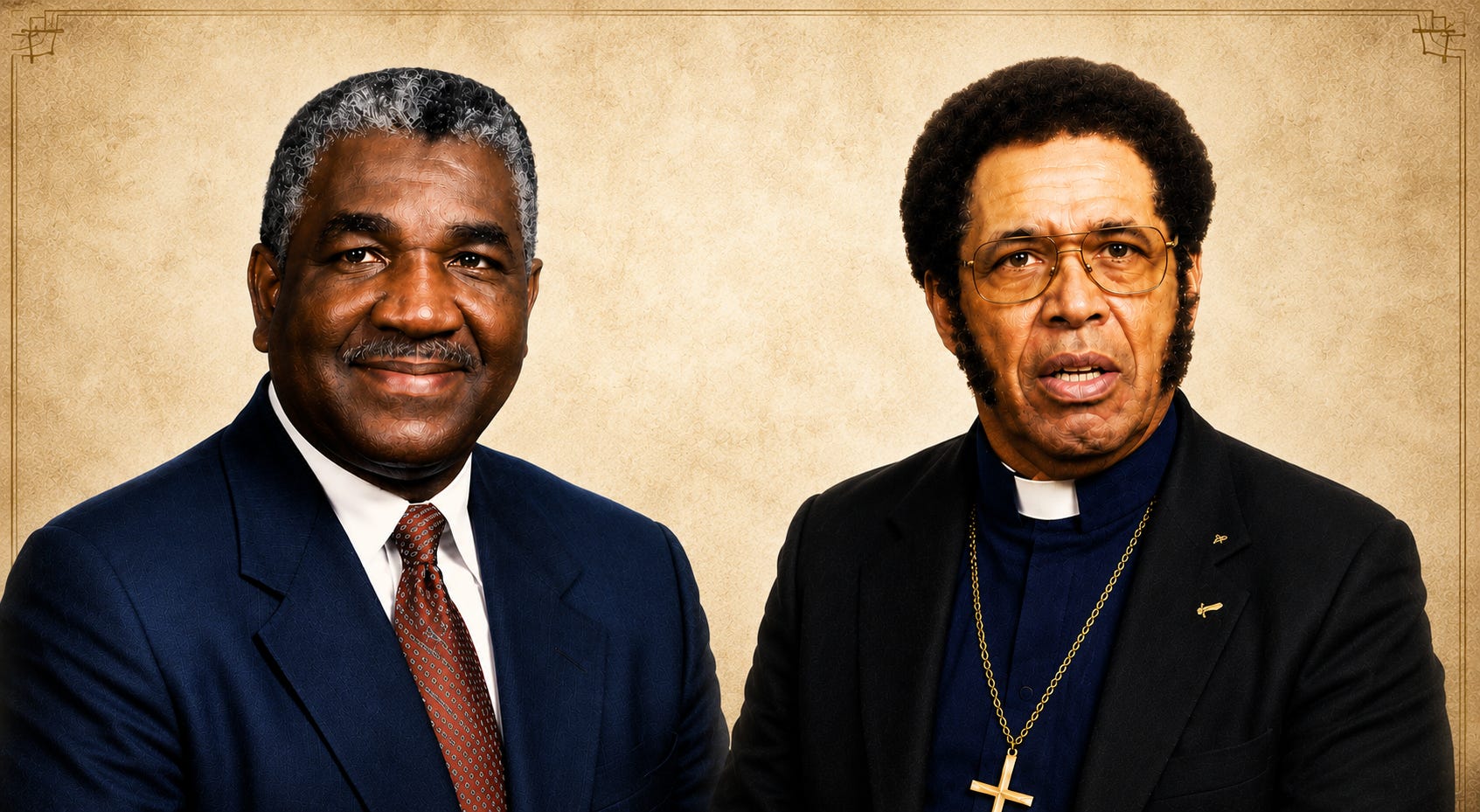
They were different men, shaped by different experiences, but they served a similar role in the life of the conference.
Both were African American. Their ministries were shaped by the civil rights era and by experiences many others in the room did not share. They had lived on the receiving end of the biases and actions that many institutions, including the Church, were still struggling to confront honestly.
Their questions often concerned equity, fairness, representation, and whether the church was truly living into the values it professed.
They were persistent.
Not everyone appreciated their questions.
Some undoubtedly found them frustrating. Others may have viewed them as cantankerous.
Yet they kept asking.
What strikes me now is that I cannot remember a single specific question either of them asked.
Not one.
I remember the questioning.
I remember the persistence.
I remember the microphones.
I remember the occasional sighs from those who thought they were slowing things down.
Most of all, I remember their presence.
Years after George’s death, someone was telling stories about him and offered an observation that has remained with me ever since.
“Do you know that thing in the middle of a washing machine?”
“The agitator?”
“Yes. The agitator is there to clean the clothes.”
I understood the joke immediately.
I did not understand the wisdom until much later.
When George and McKinley died, we lost more than two conference members.
We lost institutions.
We lost memory.
We lost perspective.
We lost voices that had become part of the conference’s conscience.
Many of the questions George and McKinley raised concerned events that occurred long before I attended my first Annual Conference in 1992.
One example involved the merger of Louisiana’s white and Black conferences following the end of the denomination’s racially segregated Central Jurisdiction in 1968. I did not witness those events. I inherited them.
George and McKinley had not.
They remembered the promises, expectations, and commitments that accompanied that historic moment. When the conference drifted from those commitments, they asked why.
At the time, I thought they were asking questions about decisions.
Looking back, I think they were helping the conference remember its own story.
What I failed to appreciate then was that their questions were not obstacles to discernment. Their questions were part of the discernment itself.
Through their questions, they were helping the conference to revisit forgotten commitments, examine assumptions, and wrestle honestly with truths that might otherwise have remained hidden.
When I was younger, I sometimes thought George and McKinley were slowing us down.
Today I find myself wondering how many mistakes they helped us avoid—and how many truths they helped us remember.
Communities forget.
They forget promises.
They forget lessons learned.
They forget the cost of getting to where they are.
They forget truths that once seemed self-evident.
Memory matters.
And communities are often far more forgetful than they realize.
As I have reflected on their absence over the years, I have come to believe that George and McKinley understood something that took me much longer to appreciate.
Discernment is not the search for a new truth.
It is the disciplined work of uncovering a truth that is already there.
We inherit assumptions. We inherit traditions, loyalties, fears, preferences, and biases. Layer upon layer they shape how we see the world until we begin mistaking our assumptions for reality.
Discernment strips back those layers to reveal the truth beneath them.
Those layers may be prejudice, politics, fear, or simply forgetfulness.
That work begins with questions.
What are we missing?
Who is not being heard?
What assumptions are we making?
How did we arrive at this conclusion?
What if we are wrong?
The purpose of those questions is not conflict.
The purpose is clarity.
George and McKinley understood that.
They understood that questions are not obstacles to discernment.
Questions are among the tools that make discernment possible.
The challenge is that questions are often evaluated through the lens of motive rather than content.
A concern is met with defensiveness.
A question is received as an attack.
A critic is treated as an enemy.
The conversation shifts from the substance of the question to assumptions about the person asking it.
Once that happens, discernment becomes difficult.
Not because the questions disappear.
Because the listening does.
This year, I found myself paying closer attention to how the room responded to questions. At times, the question itself seemed to matter less than the assumptions that followed it. Before a concern could be explored, conversations sometimes shifted toward why the question was being asked rather than what the question was asking. Curiosity gave way to defensiveness. Listening narrowed.
I found myself watching faces across the room. Some reflected curiosity. Others reflected frustration. A few seemed to communicate that the question itself was unwelcome. In a deliberative body, those reactions matter. They shape whether people feel invited into the conversation or discouraged from participating in it.
The lesson was not that every question was correct.
The lesson was that discernment requires us to wrestle honestly with questions before we decide what to do with them.
Healthy discernment demands something more.
It requires assuming righteous motives, listening carefully, acknowledging our own biases, and maintaining enough humility to accept that someone else may see something we do not.
In short, it requires the courage to remain curious.
Healthy communities make room for the people who ask questions that challenge their assumptions.
They resist the temptation to become defensive when those questions arise.
They understand that curiosity is often the beginning of wisdom.
Annual Conference has always been more than a legislative gathering for me. It is one of the institutions that helped shape me. After years spent serving far from home, I return each June hoping to find respite among the people who first taught me what it means to be Church.
Not because I expect agreement.
Not because disagreement is a problem.
But because discernment becomes difficult when curiosity gives way to defensiveness and questions are treated as threats rather than opportunities to learn.
Perhaps what I am really hoping for is that Annual Conference remains a place where difficult questions can be asked and honest listening can occur.
These days, I find myself thinking more often about George and McKinley.
Not because I agreed with every question they asked.
Not because they won every debate.
But because I increasingly understand the role they played.
Some of the truths we celebrate today first arrived in the form of uncomfortable questions.
Some of the changes we now embrace began with voices that were dismissed, misunderstood, or resisted.
Communities need people willing to ask hard questions.
Not because questions are sacred.
Because truth is.
George and McKinley understood that.
The older I get, the more I think they always did.
They were not trying to win arguments.
They were trying to help us remember who we were.
Every washing machine has an agitator.
It creates movement.
It stirs what has settled.
It creates turbulence.
It makes noise.
It is not always appreciated.
Without it, the machine still runs.
But the clothes never get clean.